Fitness Studio or Gym Books CleanupA trainer who rents the room.
The invoice can say contractor. The hour still has to be read.
Ask about the hourThe invoice can say contractor. The hour still has to be read.
Ask about the hourA trainer who pays the studio for a room is a tenant of that hour. A trainer the studio pays to coach a member is on the other side of the same door. Those two facts can be true in the same week, and they do not become one fact because the invoice uses one name.
The rent invoice should name the room and the block of time. The pay record should name the member hour, if there is one. When both numbers sit on one line, the file cannot say which way the money moved. We split them before anyone picks a form.
A page that calls the person a contractor does not decide the question. The question is who controls how the hour is done, when it is done, and where it is done. A studio that sets the clock, hands over the member, and tells the trainer which method to use is describing an employee hour even when the paper says otherwise.
A trainer who brings their own clients, sets their own clock, and only buys the room is closer to the other answer. We will say which way the facts point. We will not treat the printed word contractor as if it were the facts.
For payments made in 2026, a gym files Form 1099-NEC when it pays 2,000 dollars or more for services to someone who is not an employee. The line before 2026 was 600 dollars. Someone on the studio payroll never appears on Form 1099-NEC. That pay runs through the provider the studio already uses.
This practice does not run payday. If the hour is employment, setup stays on that provider. If the hour is a true contractor hour, the information return is the paper, and the rent the trainer paid the studio is a different paper. Names can stay covered. The direction of the money cannot.
Before the first class of a new arrangement we want four plain answers. Who finds the member. Who sets the clock. Who decides the method. Who keeps the fee if the member does not show. Those four answers are enough to say whether the draft should show rent, wages, or a contractor payment.
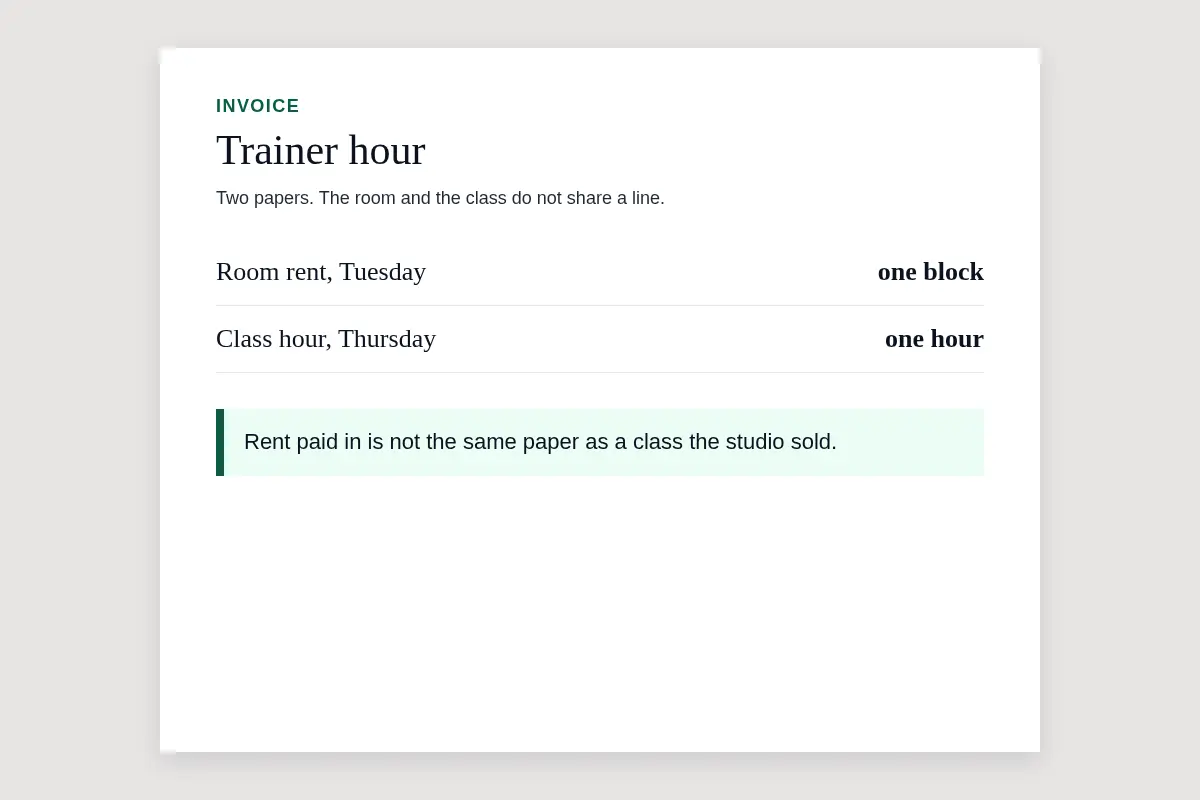
A mixed week is allowed to be a mixed week. Tuesday can be a rented room. Thursday can be a class the studio sold. The file should say so on Tuesday and again on Thursday, instead of picking one label for the person and forcing every hour through it.
We do not decide a credential, and we do not sign a payroll return from this page. If a worker dispute reaches a hearing, this practice gathers papers and does not stand in the studio's place. A gym that wants the refused signatures listed out, payroll return included, reads the line drawing on the disclosures page.
If the truest note is that the trainer only rents the room and coaches their own clients, that can be a short visit. We would rather say that on the first call than invent a payroll setup the studio does not need.
Say who sets the clock and who finds the member. Leave the amounts off.